Wallboard Layout 8 - Inbound Call Center Wallboard

About Wallboard Layout 8

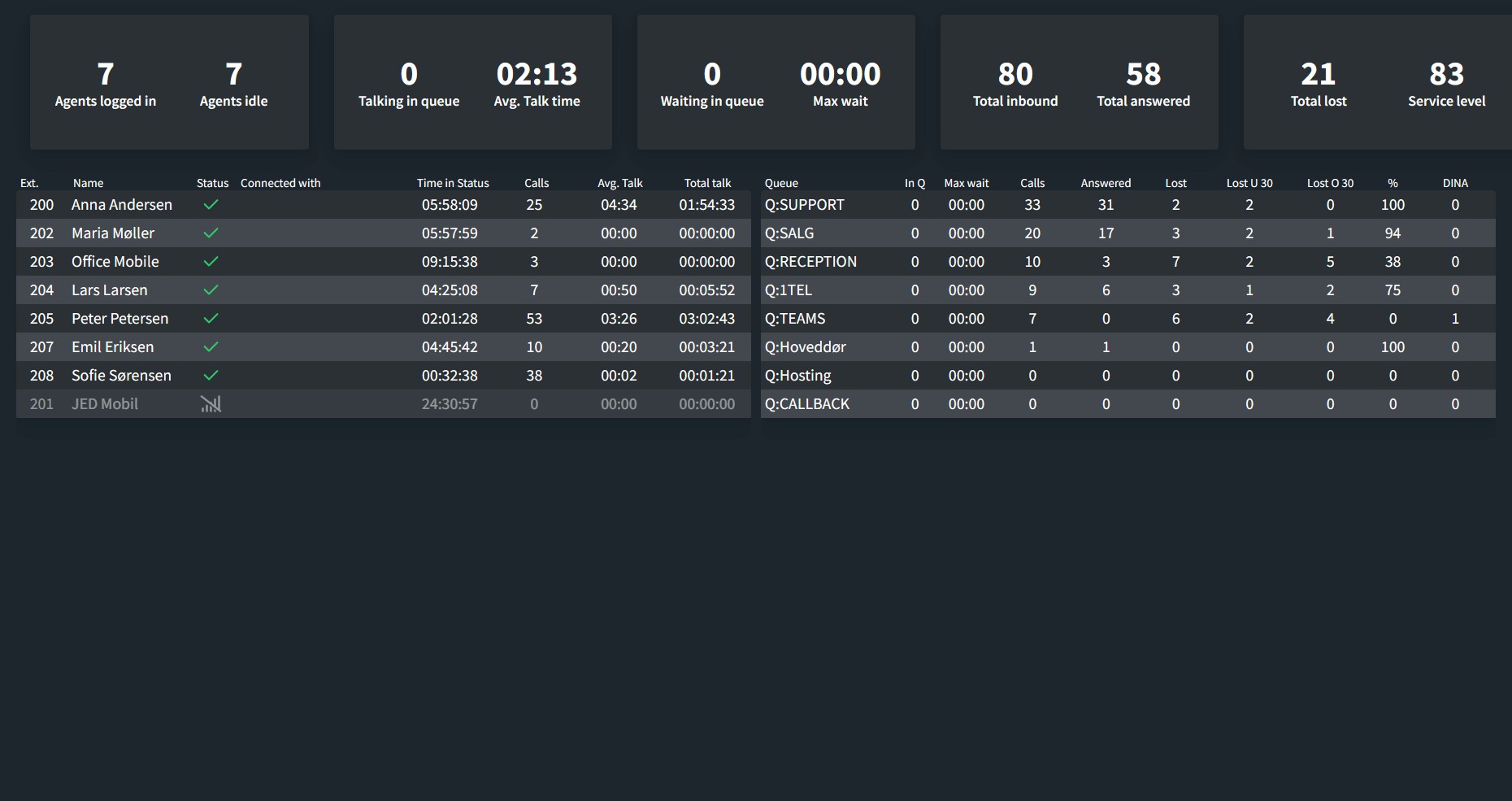
Wallboard Layout 8 displays inbound statistics for both the agents and queues

The wallboard is an excellent monitoring tool for incoming call center team leaders and agents. The wallboard includes sorting options on the majority of table rows, resulting in a dynamic experience wherein the agents/queue change position based on their data.

This wallboard can show up to 25 separate queues and their agent’s individual call statistics at the same time. The wallboard view is determined by the number of queues added to the wallboard. You will be able to scroll in both the queue list and the extension list.

Explanation of wallboard measurements

Queue calls are the aggregate of all calls made to the queues, that has been chosen to be shown on the wallboard.

Example: Queue 800 has 20 queue calls, Queue 801 has 100 queue calls, and Queue 802 has 50 Queue calls. In this instance, the number 170 will be displayed.

Answered queue calls displays the number of answered queue calls.

Servicelevel for all queues is the servicelevel combined for all queues.

The servicelevel calculation is: Answered / (Calls – Lost U 30) * 100

Waiting in queue is the amount of people/customers currently waiting in all queues combined.

Agents logged in is the amount of agents currently registered combined for all Extensions.

Agents Idle is the amount of agents with the available status.

Column explanation

Ext – Displays each agent’s extension number.

Name – Displays the agent’s name.

Status – Displays the agent’s current status. Available, busy, dialling, ringing, DND, or one of two custom statuses are all options.

Connected with – Displays the phone number to which the agent is connected if he or she is connected.

Time in call – This displays the amount of time the agent has spent on a call, beginning with the moment the recipient answers the phone.

Calls – This metric displays the total number of successful inbound calls. When a call is answered, it is considered successful and valid. Outbound calls will have no effect on this value.

Average talk – This metric displays the agent’s average talking time. Only successful Inbound calls are counted.

Total talk – The entire time the agent has been in an active inbound call.

Wallboard Layout 8 settings

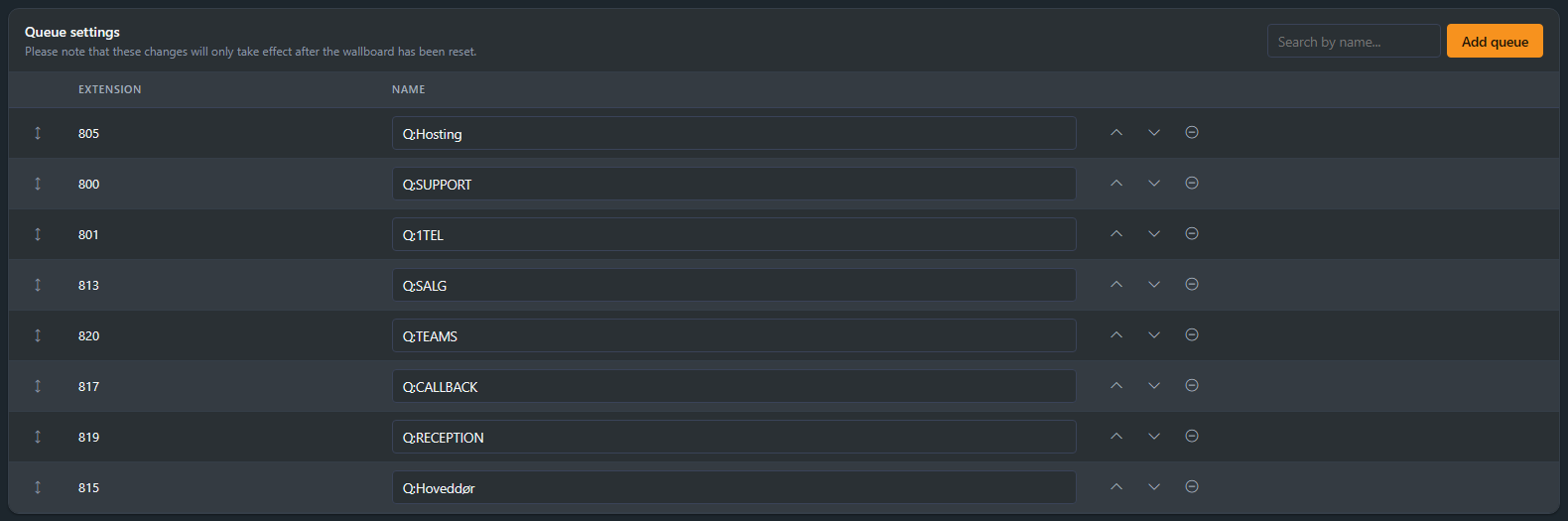
Select queues

Open the Queues tab and add the queues that should appear on the board with Add queue. Reorder them with the arrows and remove one with the minus button. Changes take effect after the wallboard resets.

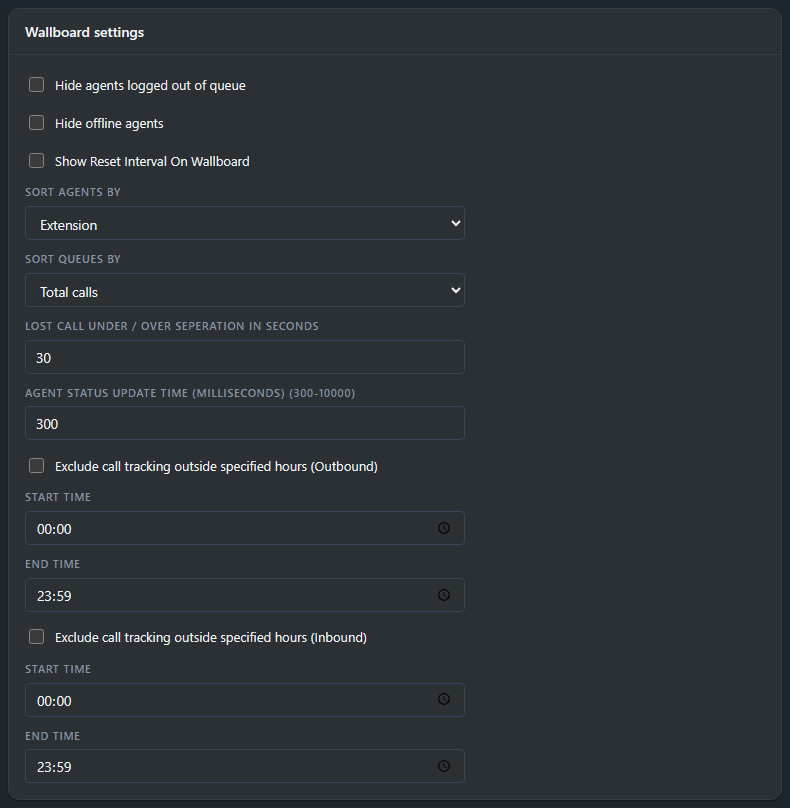
Display options

  • Hide agents logged out of queue removes agents that are not logged into the queue from the board.
  • Hide offline agents removes offline agents entirely.
  • Show Reset Interval On Wallboard displays the reset schedule on the board itself.
  • Sort agents by orders the agent list by extension, name or status.
  • Sort queues by sets the order of the queue table, for example by total calls.
  • Lost call under / over seperation is the threshold in seconds that splits lost calls into the Lost U and Lost O columns (default 30). It is also part of the service level calculation.
  • Agent status update time sets how often the board refreshes, from 300 to 10000 milliseconds. On large systems with many queues and agents, raising it from 300 ms toward 5000 ms lowers the load on your 3CX server.
  • Exclude call tracking outside specified hours keeps calls outside the start and end times you set out of the numbers, so night calls stay out of the daily figures. Outbound and inbound tracking each have their own time window.

Press Save after changing settings.

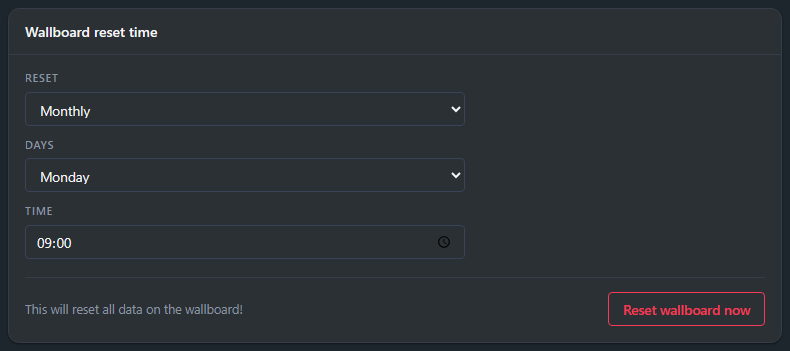
Reset schedule

The wallboard counts from its last reset. Reset sets the schedule: daily, weekly or monthly. Days picks the weekday or day of the month, and Time is the time of day the counters clear.

Reset wallboard now clears all data on the wallboard immediately.

Share the wallboard

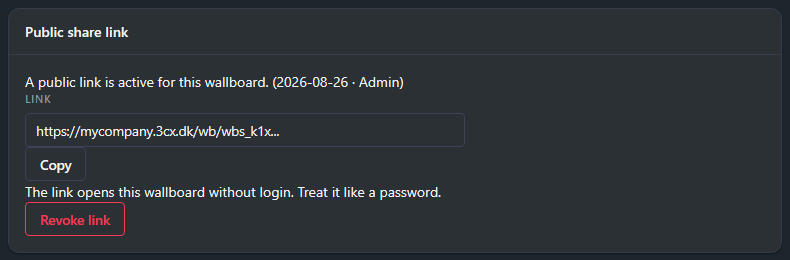
Generate a public link and open it on any screen (a TV, an info display, a browser): the wallboard runs live without logging in.

The panel lists every link with when and by whom it was created. Treat a link like a password: anyone who has it can see the board, and you can delete it at any time to revoke access.

For creating wallboards and the settings shared by every layout, see How to create a wallboard.

Find more Wallboard info in the posts below

Wallboard Gallery

Wallboard Gallery Empower Your Team with Real-Time Data Effective wallboards deliver real-time operational insights, keeping your team informed and proactive.

Read More »